Plasma Transformation

Low-temperature plasma
to transform industry,
the environment,
and the future.

Patented low-temperature plasma decomposes and neutralizes water, air, CO₂ and PFAS.
Field-proven technology, brought to your industry.

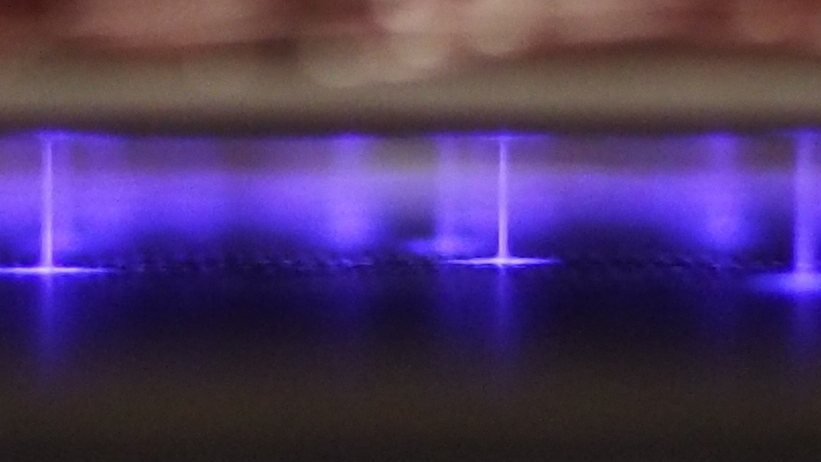
Low-temperature plasma glow generated by dielectric barrier discharge (DBD)
Low-temperature plasma glow (DBD discharge) ― Photo: Devansh.sharma / CC BY-SA 4.0, via Wikimedia Commons
NEWSTopics

About PXAbout PX

A new industrial era, opened by low-temperature plasma.
Low-temperature plasma ― the fourth state of matter ― is now rewriting the conventions of industry.

Free from chemicals and heat. Achieving sterilization, cleaning, decomposition and surface modification without adding environmental burden ―
low-temperature plasma is a next-generation environmental technology essential to a sustainable society, and research and development is accelerating at institutions worldwide.
Its applications reach across nearly every future industry: AI and semiconductors, medical, beauty, food, agriculture and water treatment.

Yet while much of the world remains at the research stage, PX is already a step ahead.

We were among the first in the world to develop low-temperature plasma generators and reactors that run reliably at an industrial scale.
Through adoption in rail infrastructure, defense and medical settings, we have turned laboratory technology into "technology you can use today."

Plasma Transformation ― industrial change driven by plasma, delivered through implementation rather than concepts.
PX leads the social implementation of low-temperature plasma at the world's forefront.

Corporate Philosophy

Mission

With low-temperature plasma technology, we solve challenges in water, air, the environment, medical care and energy, contributing to the future of the planet and its people. By decomposing and neutralizing pollutants rather than merely capturing them, we realize a circular society free of secondary waste.

Vision

To implement low-temperature plasma as the industrial infrastructure of the world, achieving both carbon neutrality and resource circulation. We aim to grow "Carbon Transformation" ― turning CO₂ into a resource ― into a global-standard technology.

Values

Prove it in the field (results on-site come first). Protect it with patents (establishing our proprietary technology as intellectual property). Expand through co-creation (partnering with universities, companies and government). Guided by these three principles, we aim to be a company trusted by society through solid technology.

NewsNews

Latest updates and topics from PX Co., Ltd.

Notice Our official website has launched.

The official website of PX Co., Ltd. has launched. We will keep this site updated with our low-temperature plasma technology, products and track record. Thank you for your continued support.

Company PX Co., Ltd. was established.

PX Co., Ltd. (head office: Kasumigaseki, Chiyoda-ku, Tokyo) was established to bring low-temperature plasma technology into real-world use, addressing challenges in water, air, CO₂ and PFAS.

* Latest topics such as exhibitions and technical presentations will be posted here as they become available.

Low-Temperature PlasmaWhat Is Low-Temperature Plasma?

Plasma is often called the "fourth state of matter," after solid, liquid and gas.
Low-temperature plasma is a next-generation technology that uses electrical energy to give electrons high energy, triggering chemical reactions ― which would normally be difficult ― at near-ambient temperature.

Unlike the ultra-high-temperature plasma of a fusion reactor, it keeps the treatment target near room temperature.
A major advantage is that it can be applied even to heat-sensitive targets such as water, air, biological materials, food and precision components.
It is one of the advanced plasma-based technologies that share common roots with the ion engine of Japan's asteroid probe "Hayabusa."

An impression of low-temperature plasma glow ― electrical energy generates reactive species radiating outward
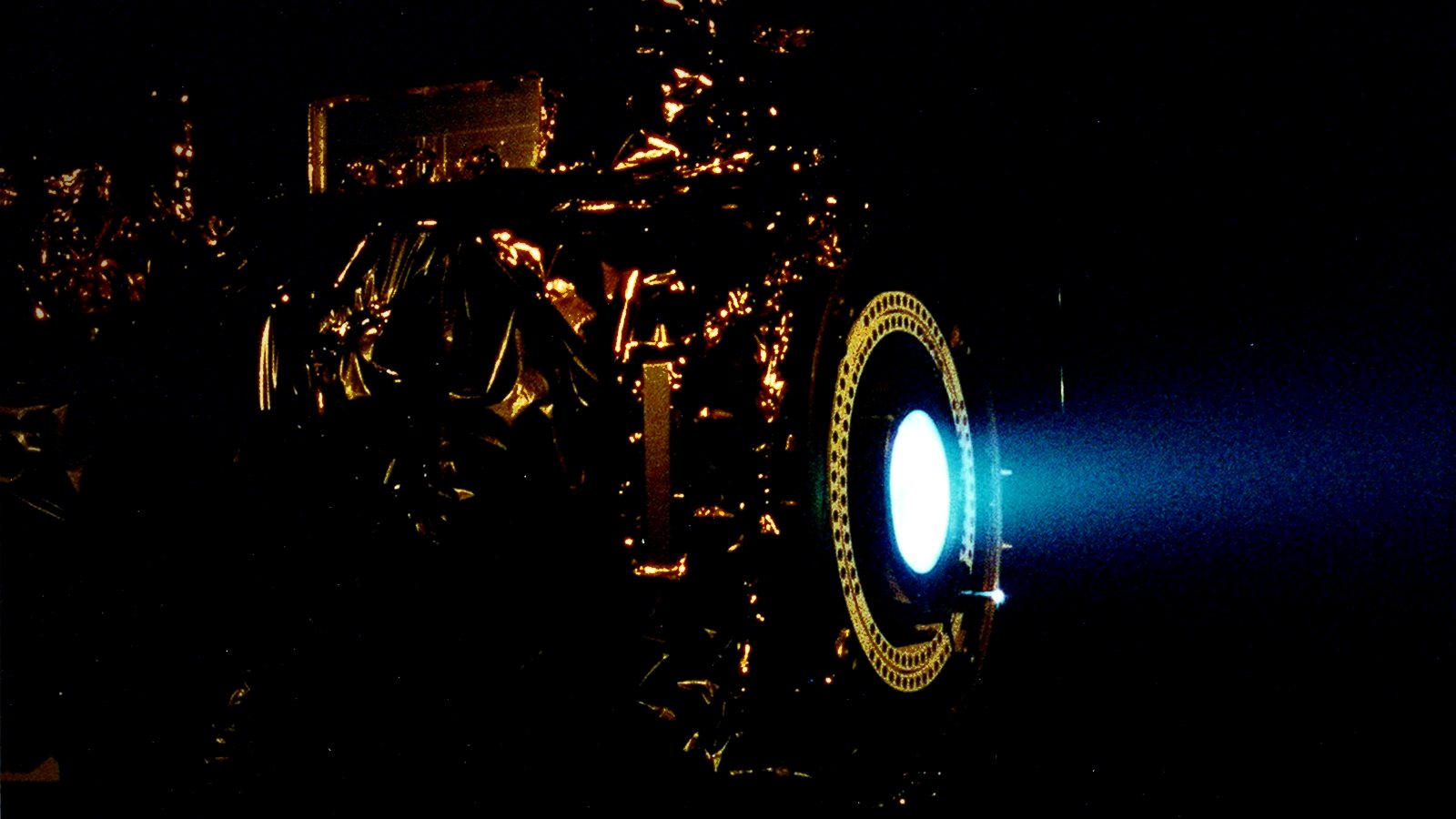
Ion engine firing test on NASA's Deep Space 1 probe
The ion engines that propel satellites are also plasma technology (Image: NASA/JPL)

Our TechnologyPX's Technology

Inheriting the low-temperature plasma technology, intellectual property, research results and field-proven track record developed through joint research with U.S. institutions, the Japan Institute for Future Science and the Institute of Science Tokyo, we develop industrial low-temperature plasma systems centered on our proprietary PX Reactor and PX Electrode technologies.

The PX Electrode incorporates powerful magnets and ultrasonic elements of specific frequencies. By combining magnetic-field control of the plasma with ultrasonic dispersion and reaction-promotion of reactive species, we further enhance discharge efficiency and treatment performance.

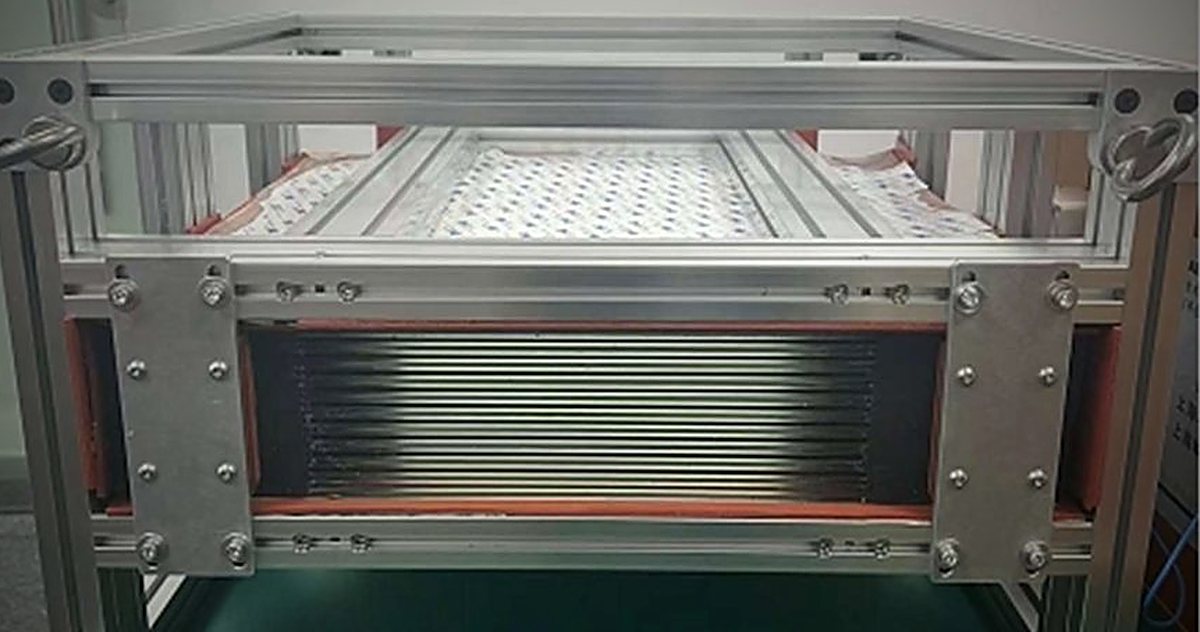
Actual unit of the world's first large-scale multilayer cylinder-type low-temperature plasma reactor
The world's first large-scale multilayer cylinder-type low-temperature plasma reactor (actual unit)

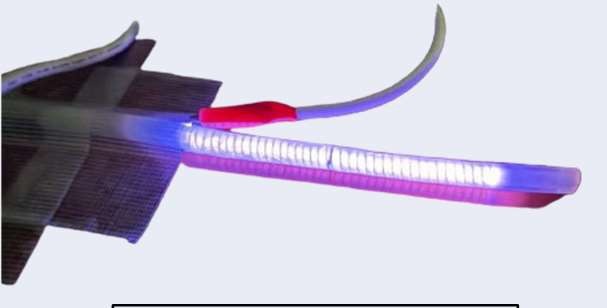
Double-Helix Soft-Tube Plasma Jet Probe

Thanks to a proprietary structure with no discharge electrode inside the tube, we achieved a flexible, bendable soft-tube form. It can be miniaturized down to the φ1 mm class and stably generates numerous plasma jets.

Its structure allows it to reach inside the body via an endoscope and other means, and its selective action on cancer cells while minimizing effects on healthy cells has been reported by research institutions in Japan and abroad. It is a next-generation device with expected applications in the medical and beauty fields.

Flexible, bendable soft-tube type In-body insertion / endoscope-compatible Selective action on cancer cells (under research)
Double-helix soft-tube plasma jet probe

ComparisonComparison with Other Methods

The overall strength of low-temperature plasma is that it can decompose even persistent substances at room temperature and without chemicals, while producing little secondary waste.

CriterionLow-Temp Plasma (PX)Chemical TreatmentHigh-Temp TreatmentActivated-Carbon Adsorption
Treatment temperatureNear room temp ◎Room temp ○High temp ×Room temp ○
Chemical useVirtually none ◎Large amounts required ×None ○None ○
Persistent substances (e.g. PFAS)Decomposable ◎Difficult ×Partial △Adsorption only △
Secondary wasteLittle ◎Sludge generated ×Little ○Spent carbon ×
Heat-sensitive targetsApplicable ◎Applicable ○Not possible ×Applicable ○
Energy efficiencyHigh ○Medium △Low ×High ○

◎ = Excellent ○ = Good △ = Conditional × = Unfavorable

We welcome inquiries about deployment and field demonstrations

Contact Us

Track RecordDeployments & Field Demonstrations

Beyond laboratory technology, our systems are being demonstrated and adopted in the field, both in Japan and abroad.

99%↑
Reduction rate for COVID-19, influenza and more (third-party institution)
N.D. (below the measurable value after 10 minutes of direct irradiation on PFOA)
COP27
Technology exhibited at the UN Climate Change Conference booth
Deployment in ICU / HCU wards
On-site flue-gas demonstration at one of the world's largest cement plants
On-site flue-gas demonstration at one of the world's largest cement plants (decomposition of CO₂-containing exhaust)
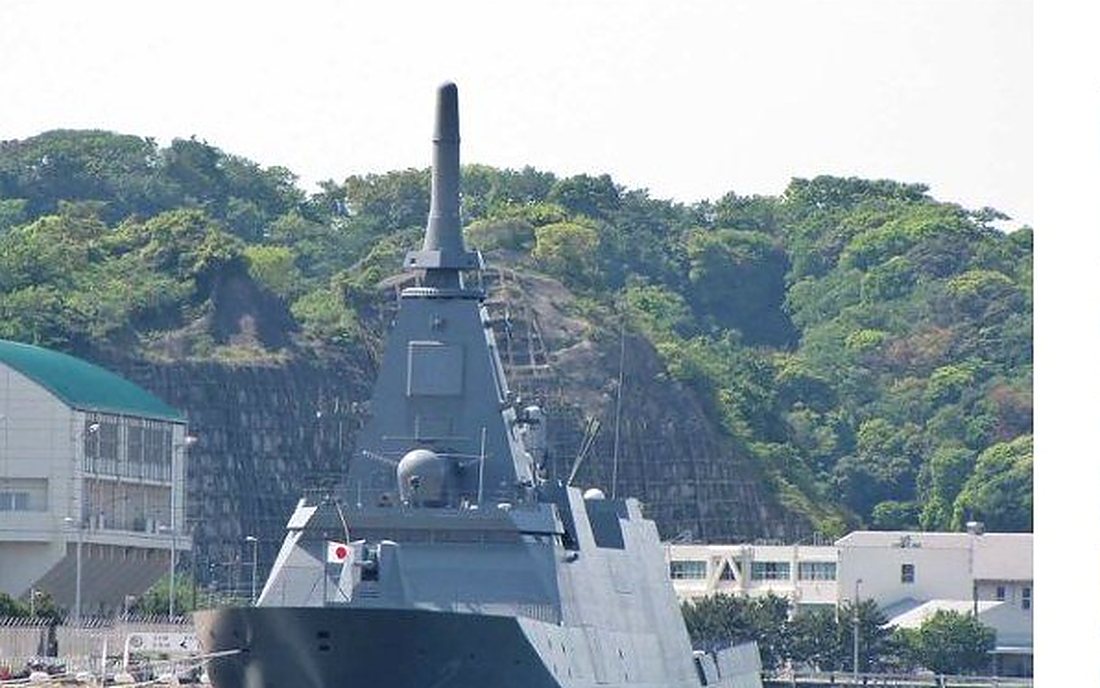
JMSDF's latest frigate 'Mogami'
Deployed as needed on the Japan Maritime Self-Defense Force's latest frigates

Key Demonstrations & Adopters

Japan Maritime Self-Defense Force National Hospital Organization JR East U.S. Navy Major food plant

Third-Party Evaluations

QTECOver 99.9% sterilization rate against a COVID-19 strain provided by the National Institute of Infectious Diseases
Industrial Analysis CenterDecomposition treatment of PFAS / PFOA ― Not Detected (N.D.)
MRI Global (USA)Verified effectiveness against various bacteria and gases (U.S. FDA-compliant lab). Responsible for the U.S. military's chemical/biological warfare countermeasure technology
ICAS / KTLPerformance evaluations by overseas third-party institutions

PGX SystemPGX ― Exhaust-Gas & Wastewater Treatment System

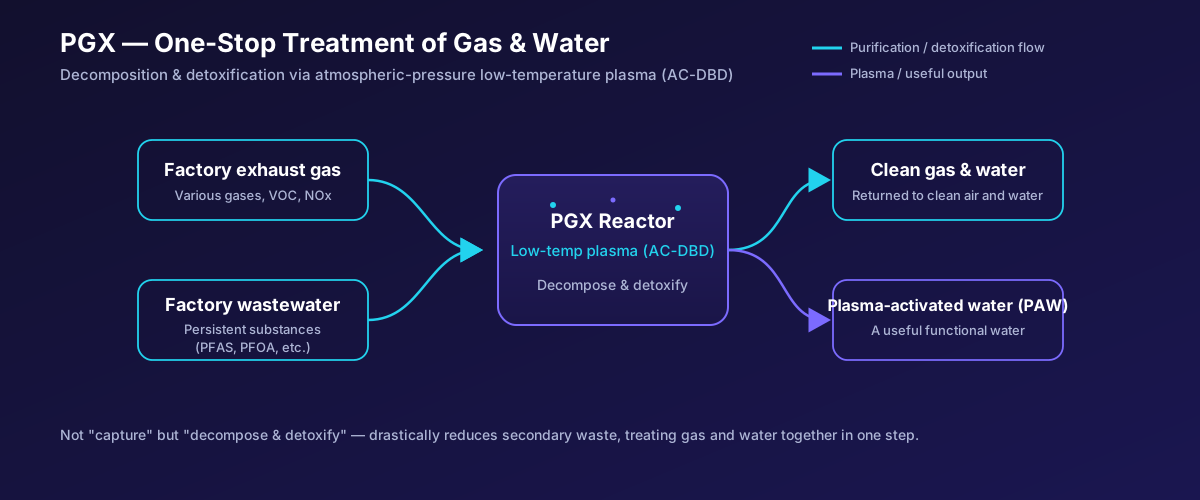
PGX is an industrial-scale integrated plasma system that treats both gas and water using atmospheric-pressure low-temperature plasma (AC-DBD).
It handles decomposition of various gases, purification of wastewater, and decomposition of persistent substances (PFAS, PFOA, etc.).
From treatment all the way to generation of Plasma-Activated Water (PAW), it delivers a one-stop solution at low temperature and low power.

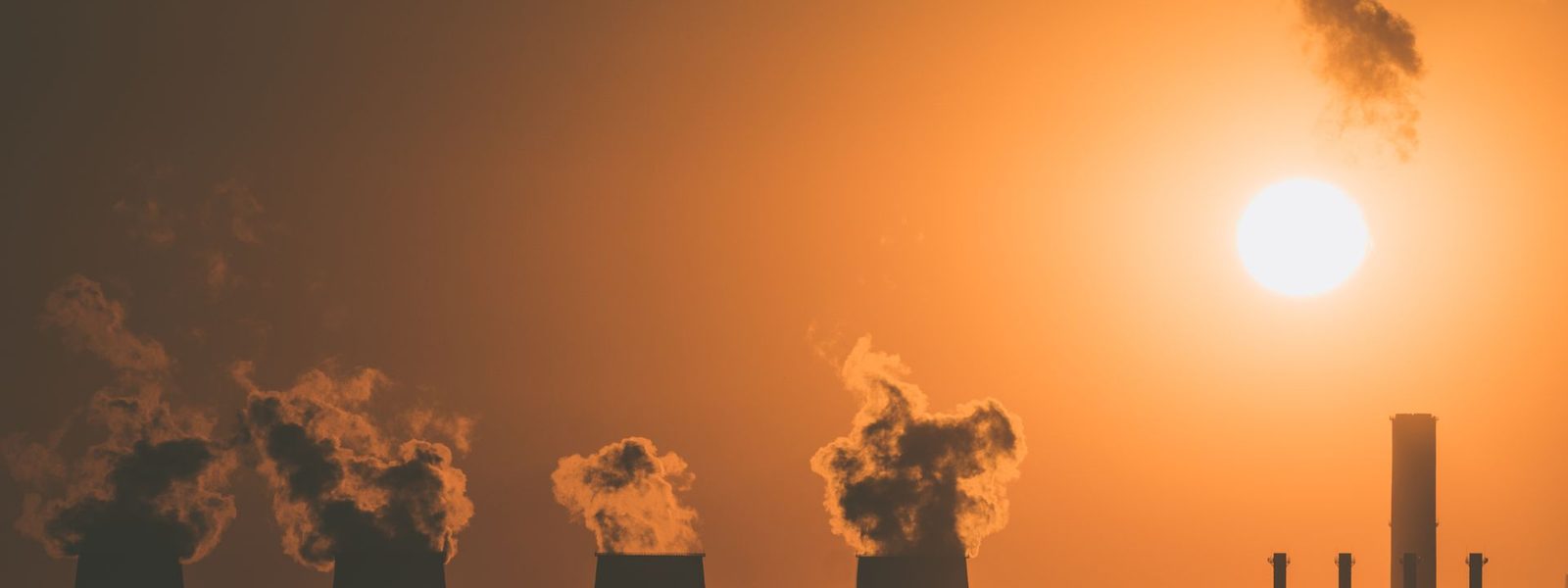
Exhaust gas rising from a thermal power plant at dusk ― the target that PGX decomposes and neutralizes
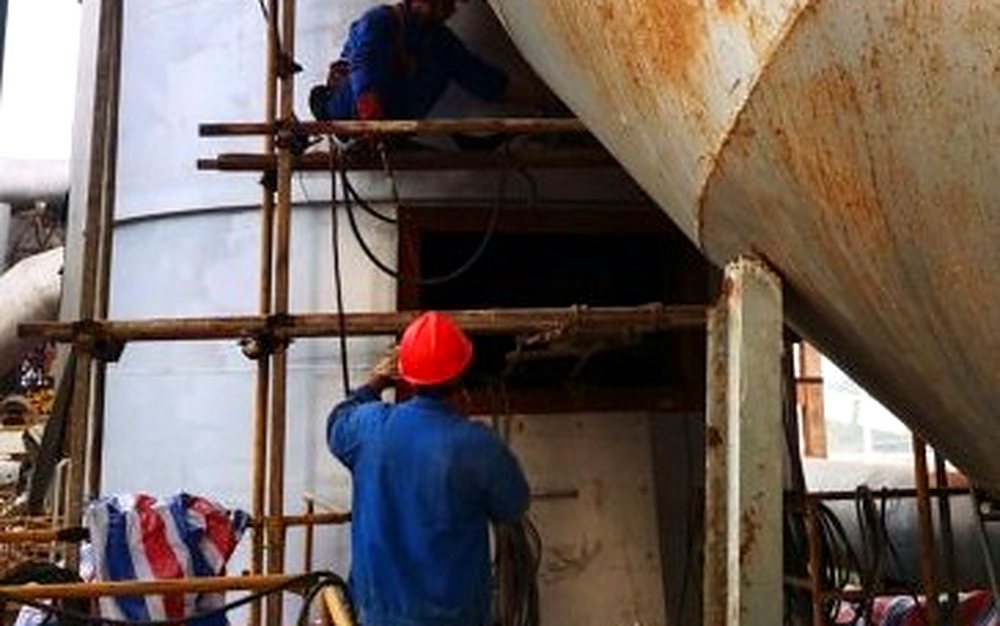
Exhaust gas and wastewater from factories and plants ― the target that PGX decomposes and neutralizes
PGX treatment flow ― from input of exhaust gas and wastewater, through low-temperature plasma treatment, to neutralization and plasma-water generation
PGX treatment flow ― decomposing and neutralizing exhaust gas and wastewater with low-temperature plasma, all the way to plasma-water generation

Our Strength ― "Decompose & Neutralize," Not "Capture"

Conventional activated carbon, ion exchange and membrane treatment merely capture and separate pollutants without decomposing them, leaving spent adsorbents and concentrated liquids behind as new waste.
Because PGX decomposes and neutralizes pollutants, it dramatically reduces secondary waste.

Plasma-based gas and water treatment is attracting global attention as a promising technology, yet most implementations remain at the laboratory or pilot scale.
We are one of the few technology companies to have deployed an industrial-scale multilayer plasma reactor with a proven treatment track record on actual units.

Handles both gas and water Decomposes even the C-F bonds of PFAS / PFOA Low power at room temperature and pressure Little secondary waste
PhaseTreatment Capacity
Gas phase1,000–3,000 m³/h
Liquid phase30–50 tons/h (plasma multifunctional water output)

Target facilities: feed plants, industrial-waste plants, food plants, sewage treatment plants, chemical plants, semiconductor plants (exhaust-gas / wastewater treatment)

Plasma Fine BubblePlasma Fine Bubble Water (PFB)

The world's first plasma turned into ultra-fine bubbles.
Using no chemicals whatsoever, it rapidly destroys microbes down to their nucleus ― "the safest and most powerful non-thermal sterilization system."

Conceptual diagram of Plasma Fine Bubble ― reactive species generated by atmospheric-pressure plasma being introduced into fine bubbles
Plasma Fine Bubble ― reactive species generated by atmospheric-pressure plasma are sealed inside fine bubbles in the liquid,
sustaining high reactivity and decomposition performance over a long period.
200×
Sterilizing power of radical species, exceeding ozone
1400×
Sterilizing power vs. chlorine (hypochlorous acid)
99%↑
Inactivates even non-enveloped viruses in 10 seconds
<¥1
Running cost per liter

Chemical-Free, Organic Sterilization

Because it uses no chemicals at all, it is gentle on both people and the environment. From food and medical to agriculture and fisheries, it replaces conventional chemical disinfectants and cleaners. After use, it returns to ordinary air and water, leaving no by-products.

Overwhelming Penetration

Ultra-fine bubbles are less than 1 micron in diameter. They deliver plasma reactive species into every corner of pores (200 microns), fibers and tiny gaps, decomposing and removing organic matter and harmful substances.

Detergent-Free Cleaning & Deodorizing

It decomposes dirt and sebum, enabling detergent-free laundry, and breaks down black mold in the washing tub. It also decomposes persistent odor gases such as hydrogen sulfide and ammonia, eliminating unpleasant smells around water fixtures.

Comparison by Functional Water

CriterionPlasma Fine Bubble WaterOzonated WaterElectrolyzed / Hypochlorous Acid Water
Sterilization methodSterilizes with plasmaSterilizes with ozoneSterilizes with hypochlorous acid
ComponentsOH radicals, nitrogen radicals, hydrogen peroxide (the same as those generated by human immune cells)OzoneHypochlorous acid
Inactivation power (sterilizing power)200× ozone / 1400× hypochlorous acid7× hypochlorous acid1 (baseline)
SafetyChemical-free, organic sterilizationHighly toxic; requires concentration controlCarcinogenic
Environmental impactReturns to ordinary water in about 1–72 hours, placing no burden on the environmentCorrodes plastic, rubber and metal; causes skin and mucous-membrane damageResidual chlorine accumulates, polluting soil and water; rusts and discolors metal
Cost efficiencyGenerated in large volumes with low power, dramatically reducing water useRequires generation equipment and raw materials; high costRequires production, dilution and filling equipment; high cost
Positive effects on the bodyReactive species reach every corner of the pores, promoting collagen production and breaking down melanin
Cost per literUnder ¥1¥50–¥65¥2,000–¥5,000 (hypochlorite) / ¥1,000–¥3,000 (alcohol)

Demonstrated in Joint Research with the Institute of Science Tokyo

20× Faster Reactive-Species Introduction

Compared with the conventional method of directly irradiating with plasma, it achieved over 20× the rate of reactive-species introduction (tested at the Institute of Science Tokyo).

Roughly 2× Faster Sterilization

In sterilization against Staphylococcus aureus, bubbling roughly doubled the BA value, an indicator of sterilization speed.

Inactivates Even Persistent Viruses

Even against non-enveloped viruses, which are hard to inactivate with alcohol and the like, it achieved over 99% inactivation in 10 seconds.

A Wide Range of Applications

Food processing plants Livestock barns (cattle, pigs, poultry) Hydroponic / greenhouse cultivation Cut-vegetable plants Sake breweries Medical & care facilities Laundromats Pools, hot springs & baths

Industrial Applications

Exhaust-gas / wastewater treatment Purification of air and water Decomposition of chemical agents such as pesticides Waste treatment & recycling Cleaning water for buildings, vehicles and ships

We welcome inquiries about deployment and field demonstrations

Contact Us

ProductsProduct Lineup

We offer water treatment (PFB) and exhaust-gas / wastewater treatment (PGX) as a one-stop proposal.

Plasma Fine Bubble Water (PFB Series) ― Water Treatment

ModelProduct NameApprox. CapacityMain Applications
PFB-4Compact modelApprox. 600 L/hToilets, cleaning, sterilization, deodorizing, small facilities
PFB-1JR typeApprox. 1,000 L/hStation buildings, public facilities, commercial use
PFB-2Bubbling / circulation combined typeApprox. 1,200 L/hWastewater treatment, circulation systems
PFB-3Standard large modelApprox. 3,000 L/hFactories, facilities, wastewater treatment
PFB-XCustom build (JR Kunitachi Station spec)Approx. 5,000 L/h (5 tons/h)Large-scale facilities

PGX Plasma Gas & Water Treatment Unit

ModelApplicationLead Time
PGX Standard SystemDecomposition of various gases, wastewater treatment, plasma-water generationApprox. 2 months
PGX Custom SystemLarge-scale equipment for factories (custom-designed)Set individually

* Specifications are subject to change without notice.
Please inquire separately for pricing and quotations.
Treatment performance varies with the type, concentration, water quality and flow rate of the target substance.
We recommend a demonstration with actual samples before deployment.

Business FieldsKey Business Fields

Low-temperature plasma is not a technology limited to a single application.
PX Co., Ltd. expands into a wide range of fields.

Water & Wastewater Treatment

Decomposition of organic matter, water-quality improvement, sterilization, PFAS / PFOA decomposition.

Air Purification & Exhaust-Gas Treatment

Handling odors, VOCs and NOx, plus air purification.

Environmental Measures for Semiconductor Manufacturing

Treatment of exhaust gas and wastewater in semiconductor manufacturing processes, and solutions to reduce environmental impact.

Medical & Hygiene

Applications to hygienic environments, cell-culture environments and more.

Agriculture & Food

Applications to cleaning, freshness preservation and hygiene management.

Energy & Next-Generation Batteries

Plasma Fine Bubble water and next-generation energy fields.

Home Appliances of the Future

Detergent-free washing machines, air conditioners and refrigerators that sterilize and deodorize, storage units that preserve freshness, and more. By embedding low-temperature plasma, we transform household appliances themselves into the next generation.

The Field Sites We Serve

From land and sea to information infrastructure and the environment ― industrial sites around the world that generate exhaust gas and wastewater are the stage where low-temperature plasma performs.

Exhaust from a container ship sailing at dusk ― exhaust-gas treatment for the shipping and maritime sector
Ships & Shipping ― Exhaust-Gas Treatment
A convoy of trailers on a highway in evening light ― exhaust-gas measures for the transport and logistics sector
Transport & Logistics ― Exhaust-Gas Measures
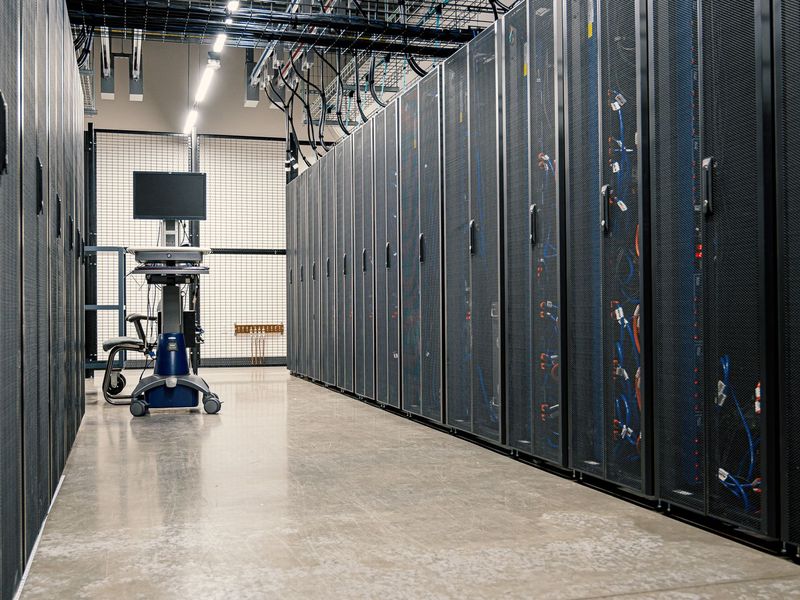
Neatly arranged server racks ― cooling-water and environmental measures for the data-center and semiconductor sector
Data Centers & Semiconductors ― Cooling-Water & Environmental Measures
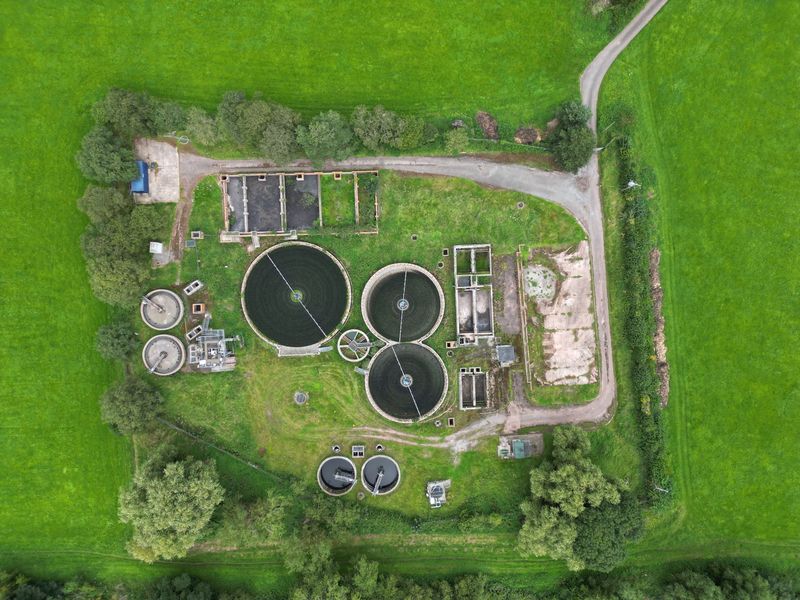
Aerial view of circular settling tanks at a sewage treatment plant ― water treatment and environmental field
Water & Environment ― Wastewater Purification & PFAS Decomposition

Carbon & ResourcesCO₂ Decomposition & Resource Circulation

Beyond decomposing harmful substances, low-temperature plasma is expanding into "carbon circulation" ― turning CO₂ into a resource ― and the recovery of valuable materials from waste.

CO₂ Decomposition at Factories & Plants

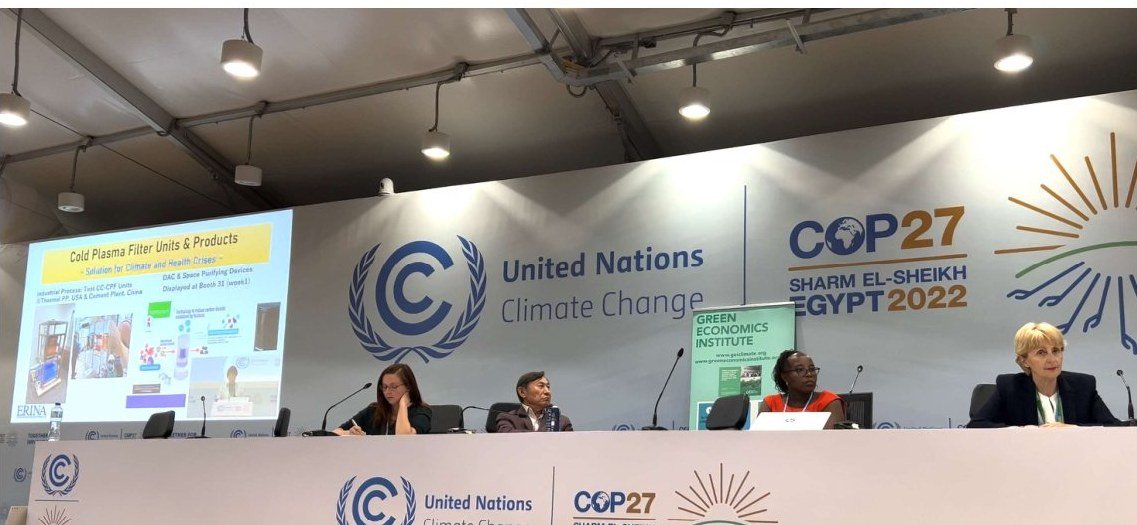
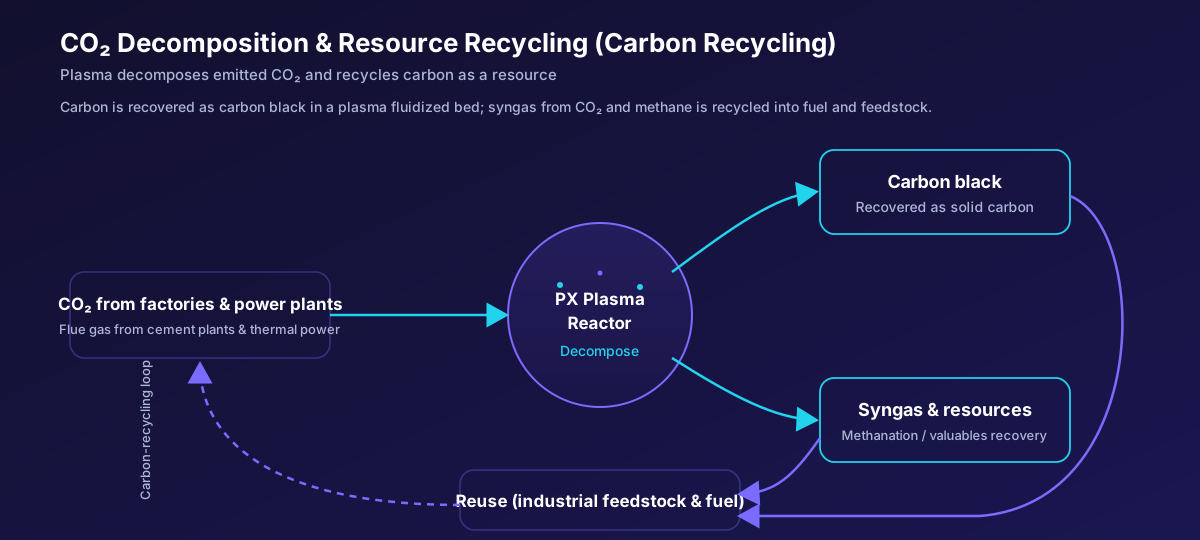
We decompose, on-site, the CO₂ contained in the flue gas of factories and plants such as cement plants and thermal power stations. In a plasma fluidized bed, it can even be recovered as carbon black (joint research with the Institute of Science Tokyo). We also exhibited a CO₂ decomposition unit at the UN booths of COP26 and COP27.

Methanation

Plasma enables expansion into secondary products such as synthesis gas from CO₂ and methane. Recovered carbon is circulated back into fuels and raw materials.

Extraction of Rare Metals & Nutrient Salts

We are advancing applications that extract and recover phosphorus, potassium, rare metals and more from wastewater and waste ― contributing to a resource-circulating society.

Technology presentation at the COP27 UN Climate Change Conference
Presenting our technology at the official session of the COP27 UN Climate Change Conference (Sharm El-Sheikh, Egypt)
Schematic showing the flow of CO₂ decomposition and carbon circulation
The flow of CO₂ decomposition and carbon circulation ― circulating recovered CO₂ back into fuels and raw materials

Next-Generation Technologies Under Development

To address the enormous waste-heat and power challenges of data centers and cooling towers, we are developing next-generation systems that apply low-temperature plasma.

Plasma Flow Battery & Integrated Cooling-Water System

A next-generation system under development for data centers and cooling towers. It integrates energy storage (flow battery) and cooling (plasma-treated water), using the electrolyte for both storage and cooling. It simultaneously delivers stable power supply, waste-heat countermeasures and improved cooling efficiency, while plasma treatment suppresses scale and slime and sterilizes the water ― also reducing the maintenance burden of the cooling-water system. It answers the growing power and heat challenges of data centers with a single system.

PX PlatformThe "Plasma Platform" Approach

Selling individual devices is not our ultimate goal.
What we aim to build is a technology foundation called the "PX Platform."
Sharing the same technological philosophy, we deploy product families optimized for each industry.

Company & IPCompany Overview & Intellectual Property

Company Overview

CompanyPX Co., Ltd.
Name OriginPlasma Transformation
CEOMinami Murahashi, CEO
AddressSankyu Bldg. 3F,
3-6-14 Kasumigaseki, Chiyoda-ku,
Tokyo 100-0013, Japan
ContactEmail only (form below)
Group CompanyIPX LLC (R&D) → (Japanese)

IP Management Framework

In addition to the intellectual property we hold ourselves, PX Co., Ltd. has built an IP management framework that centrally manages and leverages the patents, know-how and related intellectual property held across our group companies.

Centered on low-temperature plasma, we hold and file intellectual property across a wide range of technical fields ― plasma electrodes, reactors, plasma-activated water (PAW), fine bubbles, PFAS decomposition, exhaust-gas treatment, semiconductor processes, storage batteries and regenerative medicine. Based on publicly available patent information, we aim to build one of the world's largest IP portfolios in low-temperature plasma.

Beyond developing, manufacturing and selling our own products, we design and supply application-specific plasma reactors, engage in joint development and OEM/ODM technology provision, and run a licensing business for companies in Japan and abroad ― advancing the social implementation of low-temperature plasma.

Patents granted / filed in Japan and the United States

An intellectual-property portfolio built around PX's low-temperature plasma technology (including group-company IP). Representative examples are shown below.

Electrodes & Plasma Reactors

  • Multilayer flat-plate DBD plasma reactor
  • Variable parallel-multilayer / series-multistage plasma treatment unit
  • Concentric cylindrical multilayer DBD electrode
  • Low-temperature plasma generator with ultrasonic / magnetic-field control

Plasma & Fine Bubble Water

  • Plasma-activated water (PAW) production method
  • Plasma Fine Bubble water generation apparatus
  • Water treatment combining fine bubbles and low-temperature plasma

PFAS & Environmental Remediation

  • System that foam-concentrates, separates and plasma-decomposes PFAS
  • Plasma fine-bubble system for soil washing
  • Recovery-circulation PFAS decomposition unit

Plasma Batteries & Electrolytes

  • Plasma electrolyte and its production method
  • Storage battery and flow-battery system using plasma electrolyte
  • Liquid-cooled storage system using self-regenerating plasma electrolyte

Resource Recovery & Reuse

  • Recovery of phosphorus etc. from wastewater / poultry manure using PAW, and circular liquid/solid fertilizer production
  • Organic-waste treatment and resource-recovery system using plasma-activated water

Semiconductor & Exhaust Gas

  • Plasma treatment unit for semiconductor exhaust-gas purification
  • Low-temperature plasma reactor for SCR pre-treatment
  • Catalyst-combined low-temperature plasma exhaust-gas treatment unit

* Granted / filed in Japan and the United States (including PCT international applications)

R&D Themes

Post-CMP cleaning reactor for semiconductors EUV resist surface treatment SiC / GaN substrate modification (proof of principle) Semiconductor encapsulation-resin pre-treatment (proof of principle) AI-controlled plasma reactor (in planning) Module-swappable large reactor (in planning) Large marine plasma water & flue-gas treatment (demonstrated) Data-center liquid-cooling & storage system (under demonstration) Drone-mounted plasma unit (demonstrated) Medical / beauty plasma unit (demonstrated)

ContactContact Us

For product deployment, demonstration tests, joint research, technical partnerships, distributor / sales partnerships or licensing, please contact us using the form below. We will reply within 2–3 business days.

Inquiries are accepted by email only.

The information you provide will be used only to respond to your inquiry.

Your inquiry has been received.

A member of our team will get back to you. Thank you very much.

Contact